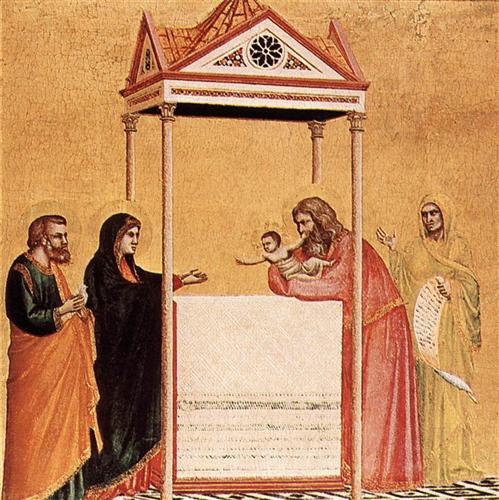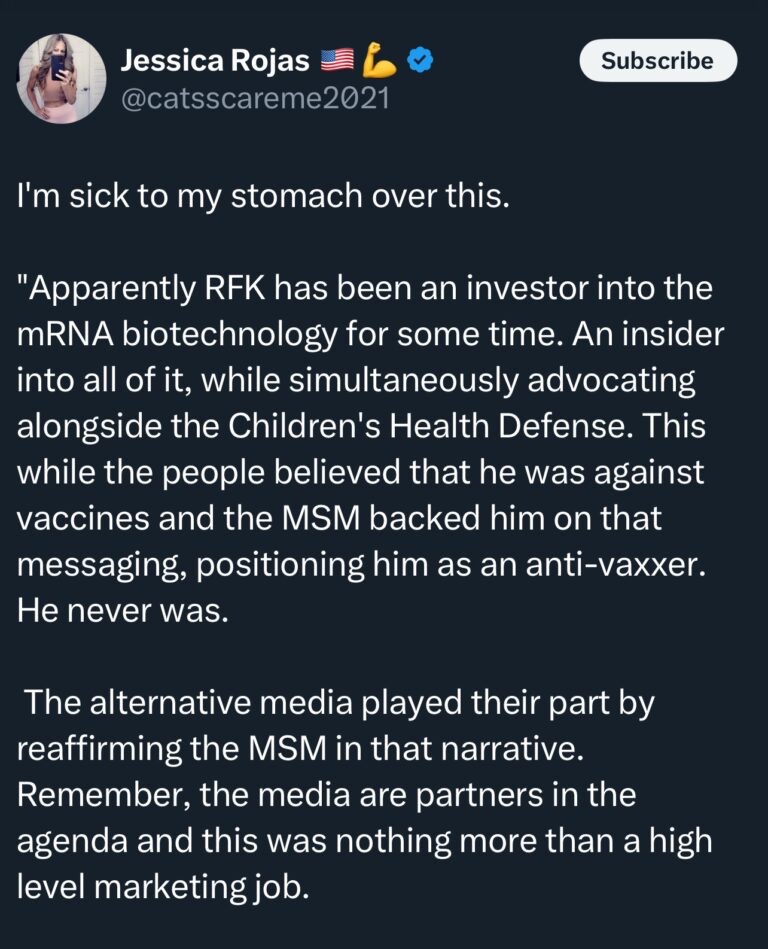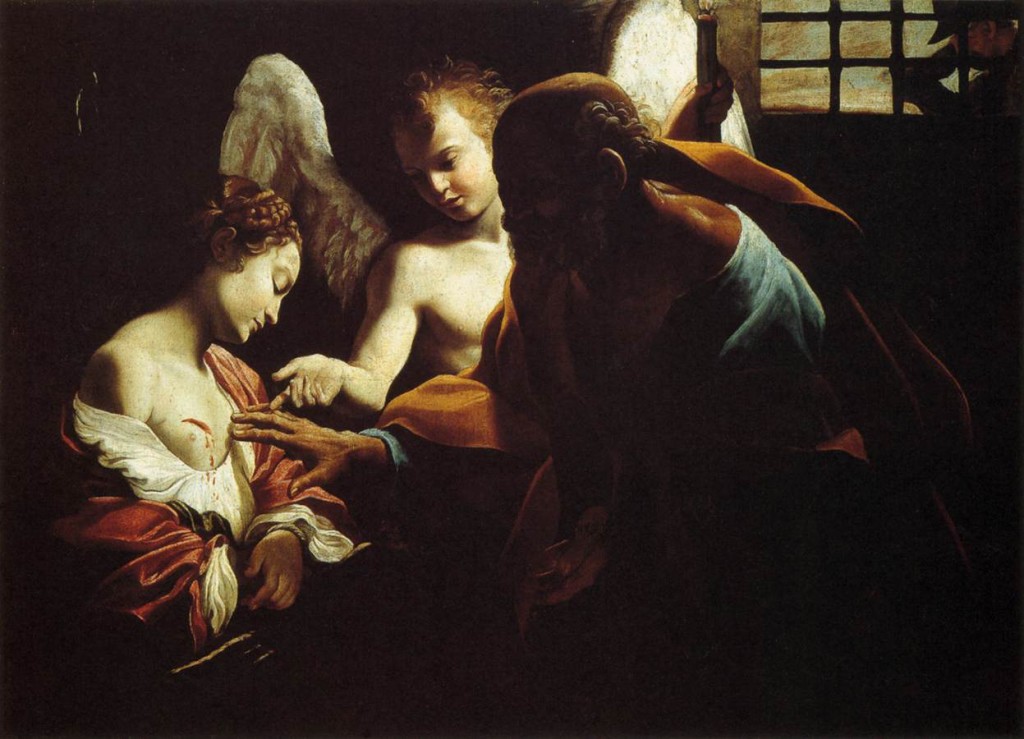
This wafted in gracefully over the transom. This is from a Catholic girls’ high school newspaper in the mid-west from the late 1940’s.
Look upon this and let it sink in that our culture is truly, literally INVERTED.
Teenaged girls today are, as a rule, revolting ugly slobs by their own choice. Beauty is actively, openly despised. Most girls today do not own ONE pretty dress. Not one. The notion that striving to always present oneself beautifully in public – and beauty is OBJECTIVE and REAL, being a constitutive quality of God Himself – is considered hate speech against fat, ugly dykes and really ANY actual females. You do notice that the only acceptable manifestation of “feminine” beauty is now transvestitism; in MEN masquerading as women. The transvestites are completely free to doll themselves up, but an actual woman? No way. Actual women are expected to conform to the cultural embrace of ugliness.
And the notion that we owe it to OTHERS to present ourselves beautifully in public, to put others first by asking ourselves, “Would I want to see me in yoga pants and a t-shirt with bedhead looking like hell? No, so why would I subject others to that? What gives me the right to inflict ugliness upon others?” – the very question is completely incomprehensible to today’s teeming throngs of narcissists.
And folks, this is about EFFORT. Speaking as a rock-solid 4 on the 1-10 scale, I turn heads on the daily NOT because I’m some great beauty. What turns heads in the EFFORT. Just being put-together and dressed in actual clothes; hat, gloves and tasteful and flattering makeup is the shocking sight. That’s it. I’m still physically a 4, but the fact that I fulfill my DUTY in the striving towards beauty actually creates beauty, just as striving for virility creates virility, striving for goodness creates goodness, and ultimately striving for sanctity creates sanctity.
Physical beauty is obviously the most worldly of these qualities, BUT it is therefore also the most readily identifiable, relatable and accessible. So, start there. Showing a fundamental respect of oneself and of others by ALWAYS appearing in public with a SOLID EFFORT towards beauty will lead to higher, non-physical qualities and virtues IF one is so oriented and has a proper, solidly Christian conception and proper ordination of true, objective beauty commensurate with one’s sex.
Also over the transom from a long-time reader (and a VERY spiffy dresser) is this link to the beautiful coat as seen here.
EIGHT DAYS. It took Him EIGHT DAYS from His birth to shed His Blood for us, and He shed His Blood in testimony to the Law, which is derivative of Himself.
And those few drops of His Blood shed at His Circumcision WERE ENOUGH. Every drop of the God-Man’s Most Precious Blood is in itself an infinity of Mercy. But He went thirty-three years further and all the way to the Pillar and to Calvary. Why? Love. Love of US. Love of YOU, specifically, personally and individually. Pure, infinite gratuitous LOVE.
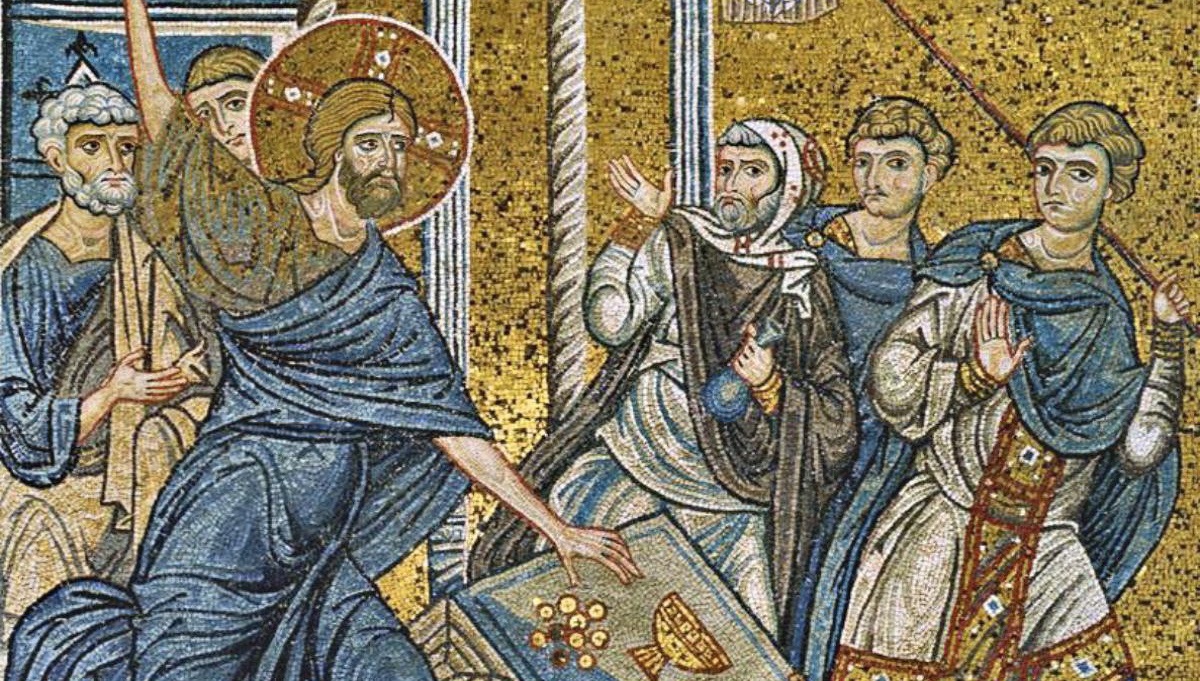
Circumcision of The Lord (detail), Guido Reni, ARSH 1635, Siena
Ponder this, and then ask yourself these questions:
Would Jesus abandon His Church, EVER? No.
Is there hope, or is hope just a lie, a mere platitude for the immature and/or uneducated peasants who simply can’t come to grips with the futility and hopelessness of it all? Of course there is hope. The second of the three theological virtues, which is also the Fruit of the Second Glorious Mystery of the Rosary (the Ascension) can never be a lie, and to say that it is a lie is blasphemy of the highest order.
Is God Almighty hamstrung and defeated by a bunch of reprobate, apostate sodomites and Freemasons? If you think He is, then you don’t know Him very well, if at all.
If God Himself submitted to the Law, does it make sense to say that His Vicar could completely upend Canon Law and only “partially resign”, thus making the Law Itself a violation of the Law of Non-contradiction, that is, both an extant thing and a non-extant thing? Are Canons 188 and 332.2 both Law and NOT Law? Is the entire Code of Canon Law, the Divine Law and the Natural Law both REAL and NOT REAL? Is chaos the Divine Will? If you think that it is, might I recommend that you visit your local mosque. They worship an irrational faux-deity that they claim is pure will, mutable (changeable), capricious, contemptuous and deceitful.
Is Jesus a jerk who is Himself trying to “give us all the shake” and trick us into apostasizing and entering an Anti-church and going to hell, or is His Church and its visible head… VISIBLE? Extremely, stunningly, shockingly VISIBLE? Terribly VISIBLE, like an… eclipse.
He was VISIBLE in life, VISIBLE in death, and now the absence, the vacancy, is so clearly VISIBLE.
Ponder these things today, on the Feast of the Circumcision.
Two years ago this morning the one and only living Vicar of Christ on Earth (whether he liked it or not) died of renal failure. Isn’t it interesting that Antipope Bergoglio mashed the throttle – attempting to suppress the Mass in the Venerable and August Rite of Gregory the Great, the attempt at Sodo-blessings – once the Pope was dead. It’s almost like the Pope was a RESTRAINER. You know, like the RESTRAINER in 2 Thessalonians 2. Hmmmmmmm…. 🤔
Here’s a picture of the absolutely Luciferian treatment of Pope Benedict’s corpse, being loaded into the back of a beat-up grey cargo van. But the thing that really jumped out at me about this picture when I saw it this morning was THE DOME. My lands. I’ve seen pictures of the dome of St. Peter’s taken within the past week, and folks, it’s black. The fact that the dome is oxidizing is not in and of itself any kind of miracle, BUT the fact that it turned black so rapidly after Pope Benedict died. It … gives one pause:
And now from Dr. Mazza, apropos of yesterday’s fifth anniversary of Antipope Bergoglio beating that Chinese lady in St. Peter’s Square.
Dr. Mazza:
And as for Bergoglio beating the Chinese lady, when you watch the longer version of the video it becomes clear he stopped shaking hands to deliberately avoid HER. I say because she was Chinese and he was afraid to get Covid (running rampant in China exactly 4 years ago).
August 8, 2019 La Stampa interview: “What do you fear most for our planet?” Bergoglio: “The disappearance of biodiversity. New lethal diseases. A drift and devestation of nature that can lead to the death of humanity.”
Yup. Antipope Bergoglio was almost certainly informed and enjoined as an integral cooperator in the CoronaScam by his WEF NWO Freemasonic Luciferian buddies.
When a profound stillness compassed everything and the night in its swift course was half spent, Your all-powerful Word, O Lord, bounded from heaven’s royal throne.
Ps 92:1
The Lord is King, in splendor robed; robed is the Lord and girt about with strength.
V. Glory be to the Father, and to the Son, and to the Holy Ghost.
R. As it was in the beginning, is now, and ever shall be, world without end. Amen.
When a profound stillness compassed everything and the night in its swift course was half spent, Your all-powerful Word, O Lord, bounded from heaven’s royal throne.
Thank you for your blog posts and videos, many of which I have found very helpful in understanding the current insanity in the Church and the world. I am particularly thankful for your recent posts on clerical celibacy and continence.
In the novus ordo Church, even before Antipope Frankenstein the Merciful, there is a common notion that allowing a priest to be laicized, so he can marry a woman, is a merciful concession to human weakness.
BULL-S***.
I am a priest, I am normal, and I am strongly attracted to women. I can understand the idea that allowing a priest to continue in his ministry after he has fallen into sexual sin (and therefore also sacrilege) with a woman and repented is a merciful concession to human weakness. By the grace of God I have never fallen into such sin as a priest, but I can easily understand how it’s possible.
Laicization and marriage is completely different. Repentance, and therefore true mercy, which requires repentance to be effective, is totally absent. In its place is substituted the cleaning up of a canonically irregular situation. A priest violates his grave obligation of continence by getting it on with a woman, and possibly also violates his obligation of celibacy by invalidly attempting civil marriage with her; and the response of the ecclesiastical authorities is to dispense him from his obligations and allow him to marry her validly in the Church.
Um, no. That doesn’t help. It actually hurts. A lot.
Although it may mean his future copulation with his wife isn’t mortally sinful, it does nothing to purge him of the guilt of his previous mortal sins of fornication, sacrilege, and abandoning his priestly ministry. On the contrary, by receiving a nice signed and sealed rescript from Rome, he is encouraged to believe that he has done the right thing, and is now “right with the Church.”
Of course that’s not true. As alter Christus, he was espoused to the Bride of Christ, and has now abandoned Her for some trull that he found more to his liking. His repentance now will almost require a miracle. He will very probably burn in Hell for all eternity, with the blessing of his bishop and the Pope. And how they will avoid burning in Hell for helping him get there, I don’t know.
My moral theology professor in seminary, Fr. Romanus Cessario, O.P., told us that “A priest who leaves for a woman is the scum of the earth.” I see more and more how right he was. Such priests–and they are many–simply declare that they love copulation more than they love God and His Mother. God have mercy on them.
I wish I could draw some pithy conclusion from this, but I can’t, so I’m going to have a beer, read some P.G. Wodehouse, and go to bed. May God bless you and your work. And may He have mercy on His poor Church.
Warmest wishes to one and all for the happiest and holiest of Christmases. As Tiny Tim said so earnestly, God bless us, everyone.
If you don’t know the three verses to Adeste Fideles in Latin and deep comprehension in English, I seriously recommend learning. Nothing brings Alpha Bravo to misty eyes in church quite like verse three (Ergo qui natus). If there is a tenor or soprano singing above the faithful… I’m toast. 😭😭😭
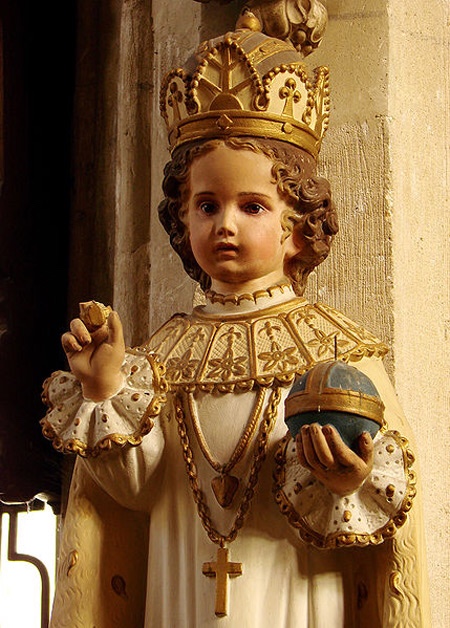
May the Infant Jesus and the Holy Family bless and keep you all.
Adeste fideles læti triumphantes,
Venite, venite in Bethlehem.
Natum videte
Regem angelorum:
Venite adoremus (3×)
Dominum.
O come, all ye faithful, joyful and triumphant!
O come ye, O come ye to Bethlehem;
Come and behold Him
Born the King of Angels:
O come, let us adore Him, (3×)
Christ the Lord.
—-
Cantet nunc io, chorus angelorum;
Cantet nunc aula cælestium,
Gloria, gloria in excelsis Deo,
Venite adoremus (3×)
Dominum.
Sing, choirs of angels, sing in exultation,
Sing, all ye citizens of Heaven above!
Glory to God, glory in the highest:
O come, let us adore Him, (3×)
Christ the Lord.
———
Ergo qui natus die hodierna.
Jesu, tibi sit gloria,
Patris æterni Verbum caro factus.
Venite adoremus (3×)
Dominum.
Yea, Lord, we greet Thee, born this happy morning;
Jesus, to Thee be glory given!
Word of the Father, now in flesh appearing!
O come, let us adore Him, (3×)
Christ the Lord.
(Last night was the longest night of the year, peak darkness, and a long-time reader was reminded of this post from a while back, which I happily reprint. –AB ’24)
In looking at deep field images from both the Hubble telescope, and now the considerably more-powerful James Webb Space Telescope (I will always spell the name ‘James Webb’ out, because Webb was rightly and justly insistent upon purging “homosexuals and sex perverts” from the Federal Government as security risks, and thus there is a drive to re-name the telescope, which we should all fight by ALWAYS spelling out the name JAMES WEBB), and it seems to me that the entire sky – which is referred to as “the firmament” in scripture – is SOLID LIGHT.
As our ability to see deeper and deeper into the universe increases at an astounding rate, it is now estimated that there are 2 TRILLION galaxies in “the observable universe” – and as I just mentioned, the definition of “observable” is expanding literally daily. To put that in perspective, there are “only” 100 to 400 billion stars in our Milky Way galaxy.
When we look at these Deep Field images, in which a telescope is pointed at a MINISCULE patch of sky – smaller than a patch of sky that would be covered if you took a single grain of sand and held it up at arms length against the sky – and just open the shutter and let the exposure cook for a few hours (12.5 hours on the latest James Webb Deep Field) or days (22 days for the most famous Hubble Deep Field), what we see is that there are SO MANY GALAXIES, that the sky is essentially a solid three-dimensional tapestry of light – albeit dim, but the whole universe in every direction is a solid mosaic of galaxies, some nearer, some farther.
If I were in charge, I would point the James Webb Space Telescope at a random patch of “the abyss”, open the shutter, and let the exposure cook for… a YEAR. And you know what I suspect we would see? SOLID. LIGHT. I strongly suspect that the “blackness” of the “abyss” of space would be completely eliminated by the light of the galaxies. I think the “blackness” of the “abyss” of space is really just a misunderstanding on our part as human beings – but a misunderstanding that is actually referenced multiple times in scripture:
Psalm 138: 11-12
And I said: Perhaps darkness shall cover me: and night shall be my light in my pleasures.
Et dixi : Forsitan tenebrae conculcabunt me; et nox illuminatio mea in deliciis meis. But darkness shall not be dark to thee, and night shall be light as day: the darkness thereof, and the light thereof are alike to thee. Quia tenebrae non obscurabuntur a te, et nox sicut dies illuminabitur; sicut tenebrae ejus, ita et lumen ejus.
Psalm 18: 2-7
The heavens shew forth the glory of God, and the firmament declareth the work of his hands. Caeli enarrant gloriam Dei, et opera manuum ejus annuntiat firmamentum. Day to day uttereth speech, and night to night sheweth knowledge. Dies diei eructat verbum, et nox nocti indicat scientiam. There are no speeches nor languages, where their voices are not heard. Non sunt loquelae, neque sermones, quorum non audiantur voces eorum. Their sound hath gone forth into all the earth: and their words unto the ends of the world. In omnem terram exivit sonus eorum, et in fines orbis terrae verba eorum. He hath set his tabernacle in the sun: and he, as a bridegroom coming out of his bride chamber, Hath rejoiced as a giant to run the way: In sole posuit tabernaculum suum; et ipse tamquam sponsus procedens de thalamo suo. Exsultavit ut gigas ad currendam viam; His going out is from the end of heaven, And his circuit even to the end thereof: and there is no one that can hide himself from his heat. a summo caelo egressio ejus. Et occursus ejus usque ad summum ejus; nec est qui se abscondat a calore ejus.
And, of course, the Prologue to St. John’s Gospel, proclaimed at the end of almost every Mass in the Traditional Rite:
John 1: 5 And the Light shineth in darkness, and the darkness did not comprehend It. Et lux in tenebris lucet, et tenebrae eam non comprehenderunt.
I believe that we are, right now, the first people to be able to make this connection to the notion that the Night Sky is an allegory of God Himself TO THIS EXTENT, especially the words “and the darkness did not comprehend it.” The light in the sky is there, always and everywhere, the entire firmament is a solid, saturated field of galactic light ALWAYS shining upon the earth, but we can’t see it unless we look. HARD. It is OUR OWN HUMAN LIMITATION that keeps us from seeing the objective reality of what literally surrounds us – unceasing, omnipresent light from every direction.
This is a near-perfect allegory of our perception of God.
Even the mechanical means of seeing into the depths of the physical universe are allegorical. A telescope must be still, and simply open its shutter in silence and let the light enter and accumulate on the exposure plate. The longer the exposure, the more light hits the exposure plate, is collected, and seen. How is this not an allegory of PRAYER?
I’m cheerfully pessimistic, if I may be permitted the phrase, that we are in a run-up to what I refer to as “The Big Show.” There is an Antipope in the Vatican, who gives every indication of being THE False Prophet Forerunner of the Antichrist. Nearly half of the human population has been injected with a poison sterilant. Demoniacs are demanding that parents physically mutilate their children in service to sodomites. We are probably months away from a literal, physical “Mark of the Beast”, and nuclear war would be received as almost a merciful relief to many people.
It thus seems to me that technologies like the James Webb Space Telescope are a wonderfully merciful part of the Divine Providence meant to BOLSTER OUR FLAGGING FAITH so that as we ride this bull, we can look up at the night sky, into what our eyes and brains can only process as “the abyss” and instead say and truly mean, “The Heavens declare the glory of God. The Light SHINES EVERYWHERE AND ALWAYS in the darkness, and the darkness does not, and will never encompass or extinguish Him.”
Today is the Feast of St. Thomas the Apostle! This is the last Feast before Christmas.
John 20: 19-31
At that time, when it was late that same day, the first of the week, and the doors were shut, where the disciples were gathered together for fear of the Jews, Jesus came, and stood in the midst and said to them: Peace be to you. And when He had said this, He showed them His hands and His side. The disciples therefore were glad, when they saw the Lord. He said therefore to them again: Peace be to you. As the Father hath sent Me, I also send you. When He had said this, He breathed on them, and He said to them: Receive ye the Holy Ghost: whose sins you shall forgive, they are forgiven them; and whose sins you shall retain, they are retained. Now Thomas, one of the Twelve, who is called Didymus, was not with them when Jesus came. The other disciples therefore said to him: We have seen the Lord. But he said to them: Except I shall see in His hands the print of the nails, and put my finger into the place of the nails, and put my hand into His side, I will not believe. And after eight days, again His disciples were within, and Thomas with them. Jesus cometh, the doors being shut, and stood in the midst, and said: Peace be to you. Then He saith to Thomas: Put in thy finger hither, and see My hands, and bring hither thy hand, and put into My side; and be not faithless, but believing. Thomas answered and said to Him: my Lord and my God. Jesus saith to him: Because thou hast seen Me, Thomas, thou hast believed; blessed are they that have not seen, and have believed. Many other signs also did Jesus in the sight of His disciples, which are not written in this book. But these are written, that you may believe that Jesus is the Christ, the Son of God; and that, believing, you may have life in His Name.
Here’s an amazing tidbit from Fr. Z. In the original Greek, the word for “hand” actually sometimes refers to the hand plus the wrist plus the lower forearm. In Ancient Greek, when you are speaking of just the hand proper, additional words can be added to make that precision. Given this, the reality of what exactly happened to St. Thomas might be far, far more intense that what we imagine.
Our Lord has breathed upon the other ten Apostles, minus the absent Thomas, thus imparting the Holy Ghost upon them, and giving them all the power of binding and loosing, thus instituting the Sacrament of Confession.
Then, Our Lord appears to them again on the eighth day, and Thomas arrives, and puts his fingers into the finger-sized nail holes in Our Lord’s hands. Then he puts what the Greek indicates is his entire hand, wrist and lower forearm all the way into the lance wound made by Longinus in Our Lord’s thoracic cavity, at Our Lord’s command.
It is conceivably possible that Our Lord breathed the Holy Ghost upon Thomas WHILE THOMAS WAS HOLDING OUR LORD’S LUNG IN HIS HAND, and that Thomas literally touched Our Lord’s BEATING SACRED HEART, and PALPATED THE STAB WOUND in Our Lord’s Sacred Heart.
Now, consider being Thomas and doing this, but also consider being one of the other Apostles standing there watching this happen, watching Thomas stick his hand and forearm into Our Lord’s side.
And if you’re thinking to yourself, “That isn’t possible…”, well, neither is walking through walls. The resurrected body of Our Lord is in an entirely different category. It isn’t held to the laws of the physical universe that bind us as we await our resurrection that He purchased for us.
People wonder why and how the Apostles were able to do what they did, and all but John were killed for the faith, and John was miraculously prevented from being killed, despite multiple efforts. Well, I reckon if we saw one of our friends stick his hand into Our Lord’s thoracic cavity up to the forearm, hold His breathing lung, and touch His Sacred Heart, we might be… confirmed and quickened, to put it mildly.
So, Happy Feast of St. Thomas! I hope you never think of it quite the same way again.
St. Thomas, pray for us.
Lord Jesus Christ, have mercy on us, on the Petrine See, unnecessarily vacant these 721 days and counting, and on Your One, Holy, Catholic and Apostolic Church, outside of which there is no salvation.
Here is a reprint in full of the ARSH 2016 magazine article on Moderna, Bencel, and the lethally toxic mRNA injections that were so toxic that they never got out of animal trials due to lethality and complete ineffectiveness. Note also that Bencel was an salesman, zero knowledge of medicine or virology. His entire business model from inception was to mimic the software antivirus model of Microsoft: create and release software viruses clandestinely, then sell subscriptions to antivirus programs which require constant “updates”. It is at this point completely obvious that Bencel and Fauci colluded to clandestinely create and leak viruses from the Wuhan Lab, from which Bencel would then get billions and eventually trillions in global contracts (and Fauci millions in kickbacks), with government-enforced mandates.
These men MUST be publicly tried, convicted and then swiftly executed. It needs to be done in an open, public way by the state FOR THE GOOD OF SOCIETY. Vigilantism is deeply sub-optimal. Civilized people handle things like this in a civilized way if at all possible. Plus, when an enforcement action and executions like these are carried out by the state, there is a dynamic of all members of the society being participants, in a sense, in the enforcement action, in this case the executions of Bencel, Fauci and others. It is, “WE tried and executed Bencel and Fauci,” not, “Some rando went vigilante on Bencel and Fauci.” Justice in this world is, ideally, a group effort.
The yuge problem I see here is Warp Speed Daddy himself. Trump probably won’t go after these men because he was a VERY big participant in this, the largest crime against humanity ever perpetrated. I don’t see how he goes after these men without indicting himself. Use RFK as a buffer? I don’t know. Pardon himself? Again, I don’t know.
Here is the ARSH 2016 article on Moderna and Bencel. I still don’t think that most people have seen or are aware of this.
-AB ‘24
Thermonuclear for Aggressive Distribution: September ARSH 2016 article on Moderna that is one of the most damning things I have ever read.
At the risk of sounding like a broken record, I’m going to reprint the entire article here AGAIN just to defend against it being memory-holed, but I would encourage all of you to share the source link, and even to save it as a PDF if you can. This article proves that the toxicity of these injections was 100% known. And beyond that, as the remnant of humanity left with even a shred of moral sanity sits in abject stupefaction as a large percentage of the population continues to line right up for even more “doses” of these poison injections, it was known years and years ago and freely admitted by Moderna and other companies looking at these so-called mRNA injections that the toxicity curve increased markedly with each dose.
As I said to the person who sent this article link to me, “Almost every sentence is a pull-quote.” Emphases mine below. As you read this, remember that it was written in ARSH 2016, and until the CoronaScam DeathJab, Moderna had STILL not brought one single drug or therapy to market. Not ONE. And it is very, very clear that the Moderna CEO, Stéphane Bancel, is a textbook Diabolical Narcissist psychopath – raging and firing competent staff when experiments failed, when having experiments fail is actually the entire point of the scientific method – it’s a process of elimination. The good news there is, DN psychopaths ALWAYS overplay their hands and self-destruct. Let’s all help speed the plough of Bancel, Moderna, Fauci and mRNA’s destruction, shall we? -AB
CAMBRIDGE, Mass. — At first glance, Moderna Therapeutics looks like the most enviable biotech startup in the world. It has smashed fundraising records and teamed up with pharmaceutical giants as it pursues a radical plan to revolutionize medicine by transforming human cells into drug factories.
But the reality is more complicated.
A STAT investigation found that the company’s caustic work environment has for years driven away top talent and that behind its obsession with secrecy, there are signs Moderna has run into roadblocks with its most ambitious projects.
At the center of it all is Stéphane Bancel, a first-time biotech CEO with an unwavering belief that Moderna’s science will work — and that employees who don’t “live the mission” have no place in the company. Confident and intense, Bancel told STAT that Moderna’s science is on track and, when it is finally made public, that it will meet the brash goal he himself has set: The new drugs will change the world.
But interviews with more than 20 current and former employees and associates suggest Bancel has hampered progress at Moderna because of his ego, his need to assert control and his impatience with the setbacks that are an inevitable part of science. Moderna is worth more than any other private biotech in the US, and former employees said they felt that Bancel prized the company’s ever-increasing valuation, now approaching $5 billion, over its science.
As he pursued a complex and risky strategy for drug development, Bancel built a culture of recrimination at Moderna, former employees said. Failed experiments have been met with reprimands and even on-the-spot firings. They recalled abusive emails, dressings down at company meetings, exceedingly long hours, and unexplained terminations.
At least a dozen highly placed executives have quit in the past four years, including heads of finance, technology, manufacturing, and science. In just the past 12 months, respected leaders of Moderna’s cancer and rare disease programs both resigned, even though the company’s remarkable fundraising had put ample resources at their disposal. Each had been at the company less than 18 months, and the positions have yet to be filled.
Lower-ranking employees, meanwhile, said they’ve been disappointed and confused by Moderna’s pivot to less ambitious — and less transformative — treatments. Moderna has pushed off projects meant to upend the drug industry to focus first on the less daunting (and most likely, far less lucrative) field of vaccines — though it is years behind competitors in that arena.
The company has published no data supporting its vaunted technology, and it’s so secretive that some job candidates have to sign nondisclosure agreements before they come in to interview. Outside venture capitalists said Moderna has so many investors clamoring to get in that it can afford to turn away any who ask too many questions. Some small players have been given only a peek at Moderna’s data before committing millions to the company, according to people familiar with the matter.
“It’s a case of the emperor’s new clothes,” said a former Moderna scientist. “They’re running an investment firm, and then hopefully it also develops a drug that’s successful.”
Like many employees and former employees, the scientist requested anonymity because of a nondisclosure agreement. Others would not permit their names to be published out of fear that speaking candidly about big players in the industry would hurt their job prospects down the road.
Moderna just moved its first two potential treatments — both vaccines — into human trials. In keeping with the culture of secrecy, though, executives won’t say which diseases the vaccines target, and they have not listed the studies on the public federal registry, ClinicalTrials.gov. Listing is optional for Phase 1 trials, which are meant to determine if a drug is safe, but most companies voluntarily disclose their work.
Investors say it’ll be worth the wait when the company finally lifts the veil.
“We think that when the world does get to see Moderna, they’re going to see something far larger in its scope than anybody’s seen before,” said Peter Kolchinsky, whose RA Capital Management owns a stake in the company.
Bancel, meanwhile, said he is aware of the criticism of him and has taken some steps to address it. After scathing anonymous comments about Moderna’s management began showing up online, Bancel went to Silicon Valley to get tips on employee retention from the human resources departments of Facebook, Google, and Netflix. But he makes no apologies for tumult past or present, pointing to the thousands of patients who might be saved by Moderna’s technology.
“You want to be the guy who’s going to fail them? I don’t,” he said in an interview from his glassy third-floor office. “So was it an intense place? It was. And do I feel sorry about it? No.”
An ambitious CEO dreams big
Bancel, 44, had no experience running a drug development operation when one of biotech’s most successful venture capitalists tapped him to lead Moderna. He’d spent most of his career in sales and operations, not science.
But he had made no secret of his ambition.
A native of France, Bancel earned a master’s in chemical engineering from the University of Minnesota and an MBA from Harvard in 2000. As Harvard Business School classmates rushed to cash in on the dot-com boom, Bancel laid out a plan to play “chess, not checkers.”
“I was always thinking, one day, somebody will have to make a decision about me getting a CEO job,” he told an audience at his alma mater in April. “… How do I make sure I’m not the bridesmaid? How do I make sure that I’m not always the person who’s almost selected but doesn’t get the role?”
He went into sales and rose through the operational ranks at pharmaceutical giant Eli Lilly, eventually leading the company’s Belgian operation. And in 2007, at just 34, he achieved his goal, stepping in as CEO of the French diagnostics firm bioMérieux, which employs roughly 6,000 people.
The company improved its margins under Bancel’s tenure, and he developed a reputation as a stern manager who got results, according to an equities analyst who covered bioMérieux at the time.
“He doesn’t suffer fools lightly,” the analyst said, speaking on condition of anonymity to comply with company policy. “I think if you’re underperforming, you’ll probably find yourself looking for another job.”
Bancel’s rise caught the eye of the biotech investment firm Flagship Ventures, based here in Cambridge. Flagship CEO Noubar Afeyan repeatedly tried to entice him to take over one of the firm’s many startups, Bancel said. But he rejected one prospect after another because the startups seemed too narrow in scope.
Moderna was different.
The company’s core idea was seductively simple: cut out the middleman in biotech.
“It’s a case of the emperor’s new clothes. They’re running an investment firm, and then hopefully it also develops a drug that’s successful.”
FORMER MODERNA SCIENTIST
For decades, companies have endeavored to craft better and better protein therapies, leading to new treatments for cancer, autoimmune disorders, and rare diseases. Such therapies are costly to produce and have many limitations, but they’ve given rise to a multibillion-dollar industry. The anti-inflammatory Humira, the world’s top drug at $14 billion in sales a year, is a shining example of protein therapy.
Moderna’s technology promised to subvert the whole field, creating therapeutic proteins inside the body instead of in manufacturing plants. The key: harnessing messenger RNA, or mRNA.
In nature, mRNA molecules function like recipe books, directing cellular machinery to make specific proteins. Moderna believes it can play that system to its advantage by using synthetic mRNA to compel cells to produce whichever proteins it chooses. In effect, the mRNA would turn cells into tiny drug factories.
It’s highly risky. Big pharma companies had tried similar work and abandoned it because it’s exceedingly hard to get RNA into cells without triggering nasty side effects. But if Moderna can get it to work, the process could be used to treat scores of diseases, including cancers and rare diseases that can be death sentences for children.
Bancel was intrigued. He knew it was a gamble, he told STAT, “but if I don’t do it, and it works, I’m just going to kick myself every morning.”
And so he became the company’s CEO — and soon developed an almost messianic reverence for the mRNA technology.
Despite having never worked with RNA before, Bancel said he sat around the table with his core team in the early days of the company, dreaming up experiments. As a result, he is listed as a co-inventor on more than 100 of Moderna’s early patent applications, unusual for a CEO who is not a PhD scientist.
Though he’s been here several years now, Bancel stands out in the freewheeling startup hub of Kendall Square. He prefers tailored suits over the industry’s fleece-heavy wardrobe, and he doesn’t shy away from sweeping promises that might trouble CEOs more concerned with managing expectations.
Under Bancel, Moderna has been loath to publish its work in Science or Nature, but enthusiastic to herald its potential on CNBC and CNN, taking part in segments on the world’s most disruptive companies and the potential “cure for cancer.”
Bancel lays out those grand ambitions in an accent that bends his own company’s name into something more akin to the Italian city. In conversation, Bancel has a salesman’s skill of making complex concepts seem simple, but with an earnestness that keeps his spiel from feeling like a con.
He peppers his speech with Silicon Valley buzzwords, many of which are scrawled on a giant whiteboard in his spacious office. Messenger RNA “is like software,” he explained: If it works in one disease, it should work for thousands.
Most biotech startups focus on one or two leading drug candidates at first, pushing them through human trials before turning to another target. Moderna, by contrast, has nearly 100 projects going at once. With mRNA, “you can just turn the crank and get a lot of products going into development,” Bancel explained, flashing a smile as though he himself was bemused by the idea’s simplicity.
Resignations, dismissals, and churn
From the beginning, Bancel made clear that Moderna’s science simply had to work. And that anyone who couldn’t make it work didn’t belong.
The early Moderna was a chaotic, unpredictable workplace, according to former employees. One recalls finding himself out of a job when a quick-turnaround experiment failed to pan out. Another helped train a group of new hires only to realize they were his replacements.
“There was a kind of Jack Welch-ian, ‘We fire the bottom 10 percent’ from the very beginning,” said a former Moderna manager. “That’s probably the biggest HR difference between Moderna and virtually any other biotech, where they talk so much about developing their people.”
Moderna went through two heads of chemistry in a single year, according to former employees, and its chief scientific officer and head of manufacturing left shortly thereafter. Those who fell out of favor with Bancel would find themselves excluded from key meetings, pushed aside until they resigned or ultimately got dismissed, employees said.
“You want to be the guy who’s going to fail [patients]? I don’t. So was it an intense place? It was. And do I feel sorry about it? No.”
STÉPHANE BANCEL, MODERNA CEO
Most stunning to employees was the abrupt departure of Joseph Bolen, who came aboard in 2013 to lead Moderna’s R&D efforts.
Bolen was a big-name hire in biotech circles, an experienced chief scientific officer who had guided Millennium Pharmaceuticals to FDA approval for a blockbuster cancer drug. He’d been profiled in The Scientist, which dubbed him “the people’s CSO” for his ability to keep morale high and research focused. Landing him was a coup.
But two years into his tenure at Moderna, he abruptly stepped down last October, making no public statement save for changing his LinkedIn status to “resigned.”
“No scientist in his right mind would leave that job unless there was something wrong with the science or the personnel,” said a person close to the company at the time.
Insiders said Bancel had effectively pushed Bolen out, hiring parallel executives until Bolen was in charge of just “a postage stamp” worth of territory, as one former Moderna manager put it. Bolen declined to comment.
For his part, Bancel acknowledged the changes that limited Bolen’s power but insisted the parting was friendly. Bancel said he tried to convince Bolen to stay, but the scientist “voted himself off the island.”
Bolen wasn’t alone. Chief Information Officer John Reynders joined in 2013 to make Moderna what he called the world’s “first fully digital biotech,” only to step down a year later. Michael Morin, brought in to lead Moderna’s scientific efforts in cancer in 2014, lasted less than 18 months. As did Greg Licholai, hired in 2015 to direct the company’s projects in rare diseases. The latter two key leadership positions remain unfilled.
“You wonder,” influential biotech blogger Derek Lowe wrote last year, “if Moderna really is a rocket ship getting ready to launch and spray a formation of new drugs across the sky, then why are these people leaving?”
The company has a simple explanation: Moderna lives in dog years compared with other biotechs.
“We force everyone to grow with the company at unprecedented speed,” Moderna Chief Financial Officer Lorence Kim said. “Some people grow with the company; others don’t.”
Bancel is sprightly in describing the company’s future, but his tone hardens on the topic of its formative years — Moderna 1.0, as he calls it.
“The people in the 1.0 team who did not really live the mission ended up either leaving or being asked to leave because they were not accomplishing what we needed them to accomplish,” he said.
Moderna’s internal turmoil came spilling messily into public view starting in late 2012, as more than a dozen harsh critiques popped up on Glassdoor, a website that allows a company’s employees — or anyone, for that matter — to write anonymous reviews of management and workplace culture.
The posts, full of invective for company leaders, eventually came to the attention of the board. “And you’d be lying to say it didn’t affect you emotionally,” said the company’s president, Dr. Stephen Hoge, a former emergency medicine physician whose tendency for self-deprecation cuts a disarming contrast to Bancel’s intensity. “Like, what if my dad sees that?”
The company sought to improve its workplace, and Hoge said the once-high turnover rate has fallen to within industry standards, though he declined to disclose specifics.
“You wonder, if Moderna really is a rocket ship getting ready to launch and spray a formation of new drugs across the sky, then why are these people leaving?”
DEREK LOWE, BIOTECH BLOGGER
Moderna — which now offers Silicon Valley-style perks like a daily catered lunch and iPhones for all employees — has roughly doubled in size each year, meaning most of the company’s current workforce of about 450 has joined since 2013. They’re spread out among three locations, and many are siloed off from top executives. Survey data from such junior employees helped vault Moderna to Science magazine’s list of top employers of 2015.
Those who buy in are all in: Some employees speak with respect bordering on awe about Moderna’s promise, with one likening the technology to “magic.”
The two current employees put forward by the company to talk with STAT sounded a note of pride at Moderna’s reputation for driving its staff hard.
“In a way, it’s a blessing in disguise,” said Edward Miracco, a senior scientist who started at Moderna in 2014. “It separates the wheat from the chaff.”
Not everyone is cut out to work at Moderna, where “things change daily, hourly,” said Dan Brock, an associate director who joined the company in February. “Everyone who comes here already kind of gets it.”
But the recent departures and vacancies suggest that turmoil continues in the top ranks — those who most closely deal with upper management, including Bancel.
“He believes in a bigger stick than carrot,” a former manager said. “Moderna has some growing up to do, no question about it.”
A gold rush for Moderna
Hoge, who joined the company in 2012, describes the early days of Moderna as “when we were living in the caves.” The company often had only enough cash to keep the lights on for six months at a time, he said. “The strategy was just to survive.”
Moderna 1.0, and life in the caves, came to a close in 2013, according to company lore.
That’s when Moderna — which had just 25 employees — signed a staggering $240 million partnership with UK pharmaceutical giant AstraZeneca. It was the most money pharma had ever spent on drugs that had not yet been tested in humans.
The agreement is commemorated in one of Moderna’s offices by a framed clipping from the New York Times. Page B7 of the March 21, 2013 edition: “AstraZeneca Makes a Bet On an Untested Technique.”
For AstraZeneca, the unprecedented deal came at a time of uncertainty. A series of clinical failures had led the firm to fire its head of research and lay off 1,600 scientists. Pascal Soriot, just six months into his tenure as CEO, was under pressure from investors to chart a new course. And Moderna, with its brash ambition to bring 100 drugs to clinical trials within a decade, gave Soriot a way forward.
The rich deal started a gold rush for Moderna. Everyone, it seemed, wanted in.
Before the end of 2013, Moderna would turn heads again with a $110 million investment round, followed by a high-dollar partnership with biotech giant Alexion.
In early 2015, Moderna disclosed a $450 million financing round, the largest ever for a private biotech company. This month, the company broke its own record, raising another $474 million.
The run-up was “biotech fervor to the extreme,” according to a venture capitalist not involved with the company, requesting anonymity to speak candidly. While bigger investors got to see all the company’s data from animal experiments, some of Moderna’s smaller investors put in funds based on just a peek, according to people familiar with the process. Moderna’s fundraising success had created a seller’s market: Why deal with the questions of one potential investor when it had 10 more lined up?
Afeyan, Moderna’s chairman and cofounder, insists the company’s investors have done their homework. To say they bought in without due diligence “would be a bit of an insult to these people,” he said.
“I hope they solve those challenges, because it’s not going to be good for the broader biotech industry in general if this thing implodes.”
BIOTECH INVESTOR
Though it has yet to reveal data from a single clinical trial, Moderna is now valued at $4.7 billion, according to Pitchbook.
That’s twice as much as Spark Therapeutics, the company widely expected to market the United States’s first gene therapy, which has shown signs in clinical trials that it can reverse blindness caused by a rare genetic disorder. Moderna is also worth billions more than Juno Therapeutics and Kite Pharma, startups developing novel treatments for cancer that have demonstrated promising results in early human trials.
Moderna has long shaken off rumors that it is soon to market its shares on Wall Street, with Hoge likening the company to a child star: “You don’t want to go through your adolescence publicly,” he told STAT.
But that’s about to change. Moderna’s next planned step is an initial public offering, according to a person close to the company. Bancel declined to say just when Moderna might go public, but the company has already prepared: In its latest filings with the Securities and Exchange Commission, Moderna changed its business structure from an LLC to a C corporation, completing a necessary step before mounting an IPO.
A strategic shift to less ambitious targets
With a public listing come required disclosures, and many are eager to see what Moderna’s been keeping under wraps all these years.
Outsiders and competitors, looking only at Moderna’s public statements, have noted a shift in strategy that might signal undisclosed setbacks.
From the start, Moderna heralded its ability to produce proteins within cells, which could open up a world of therapeutic targets unreachable by conventional drugs. The most revolutionary treatments, which could challenge the multibillion-dollar market for protein therapy, would involve repeated doses of mRNA over many years, so a patient’s body continued to produce proteins to keep disease at bay.
But Moderna’s first human trials aren’t so ambitious, focusing instead on the crowded field of vaccines, where the company has only been working since 2014.
First are the two vaccine trials for undisclosed infectious diseases. Coming next is a one-time treatment for heart failure, developed in partnership with AstraZeneca, followed by another experimental vaccine, for Zika virus, which several other pharma companies are also working to develop. And after that, Moderna is planning a human trial of a personalized cancer vaccine using mRNA, something it just came up with last year.
The choice to prioritize vaccines came as a disappointment to many in the company, according to a former manager. The plan had been to radically disrupt the biotech industry, the manager said, so “why would you start with a clinical program that has very limited upside and lots of competition?”
The answer could be the challenge of ensuring drug safety, outsiders said.
Delivery — actually getting RNA into cells — has long bedeviled the whole field. On their own, RNA molecules have a hard time reaching their targets. They work better if they’re wrapped up in a delivery mechanism, such as nanoparticles made of lipids. But those nanoparticles can lead to dangerous side effects, especially if a patient has to take repeated doses over months or years.
Novartis abandoned the related realm of RNA interference over concerns about toxicity, as did Merck and Roche.
“Now, as we’re going to human [trials], it’s pretty clear no one else is going to catch us.”
KENNETH CHIEN, SCIENTIST WHO WORKS WITH MODERNA
Moderna’s most advanced competitors, CureVac and BioNTech, have acknowledged the same challenge with mRNA. Each is principally focused on vaccines for infectious disease and cancer, which the companies believe can be attacked with just a few doses of mRNA. And each has already tested its technology on hundreds of patients.
“I would say that mRNA is better suited for diseases where treatment for short duration is sufficiently curative, so the toxicities caused by delivery materials are less likely to occur,”said Katalin Karikó, a pioneer in the field who serves as a vice president at BioNTech.
That makes vaccines the lowest hanging fruit in mRNA, said Franz-Werner Haas, CureVac’s chief corporate officer. “From our point of view, it’s obvious why [Moderna] started there,” he said.
Moderna said it prioritized vaccines because they presented the fastest path to human trials, not because of setbacks with other projects. “The notion that [Moderna] ran into difficulties isn’t borne in reality,” said Afeyan.
But this is where Moderna’s secrecy comes into play: Until there’s published data, only the company and its partners know what the data show. Everyone outside is left guessing — and, in some cases, worrying that Moderna won’t live up to its hype.
“Frankly, I hope that there’s real substance and I hope they solve those challenges, because it’s not going to be good for the broader biotech industry in general if this thing implodes,” said one investor not involved with Moderna.
And it could still go either way, former employees said. If Moderna’s promises come to fruition, it could be a pillar of the biotech industry. If they don’t, it could find a place among a short list of companies that have cast a shadow over the entire industry and left investors disillusioned.
“Either we’ll be talking about it as the next Genentech,” a former Moderna manager said, “or we’ll think, ‘Well, back then, first there was Turing, then there was Valeant, and then there was Moderna.”
Enough cash to absorb some setbacks
Moderna’s management and its investors are keeping the faith, pointing to the company’s pipeline of 11 drug candidates and more than 90 preclinical projects.
And with Moderna’s huge cash reserves — estimated at $1.5 billion — it can afford a few setbacks, proponents said. The company said it’s pouring money into its manufacturing operation, planning to spend $100 million this year on a new plant. Moderna has pioneered an automated system modeled on the software Tesla uses to manage orders, Bancel said: Scientists simply enter the protein they want a cell to express, and testable mRNA arrives within weeks.
“If we have a bump in the road in the clinic, we will not have to wait years to go back to the drawing board,” Bancel said.
That has always been part of the plan, former employees said, pointing to Bancel’s fascination with the tech industry. Uber and Amazon were not the first to come up with their respective business ideas, but they were the ones that built enough scale to ward off competition. And Moderna is positioning itself to do the same in mRNA.
“Now, as we’re going to human [trials], it’s pretty clear no one else is going to catch us,” said Dr. Kenneth Chien, a professor at Karolinska Institutet working with Moderna and AstraZeneca.
Dr. Tal Zaks, Moderna’s chief medical officer, promises that the company will soon break its silence on the publishing front. He said next year Moderna will disclose the animal data that helped get its two vaccines into the clinic. The company has also committed to publishing full results from all of its human trials, starting with the vaccine studies next year.
Moderna’s reticence to share data earlier is “not because we decided to be secret,” Zaks said. “This is the natural evolution of a platform. As we go into the clinic, we will be very transparent.”
For all the tumult at Moderna these past few years, Bancel said the company remains true to its mission statement: “Deliver on the promise of mRNA science to create a new generation of transformative medicines for patients.”
The message, which adorns the walls of Moderna’s offices, was first to be printed on posters, but Bancel insisted it be inscribed in paint.
“Because that,” he said, pointing to the first word, “is not ever going to change.”