Pentecost Novena: Ninth Day – The Fruits of the Holy Ghost

(The novena in honor of the Holy Spirit is the oldest of all novenas since it was first made at the direction of Our Lord Himself when He sent His apostles back to Jerusalem to await the coming of the Holy Spirit on the first Pentecost. It is still the only novena officially prescribed by the Church. Addressed to the Third Person of the Blessed Trinity, it is a powerful plea for the light and strength and love so sorely needed by every Christian.)

NINTH DAY (Vigil of Pentecost)

Thou, on those who evermore Thee confess and Thee Adore, in Thy sevenfold gift, Descend; Give Them Comfort when they die; Give them Life with Thee on high; Give them joys which never end. Amen

The Fruits of the Holy Spirit

The gifts of the Holy Spirit perfect the supernatural virtues by enabling us to practice them with greater docility to divine inspiration. As we grow in the knowledge and love of God under the direction of the Holy Spirit, our service becomes more sincere and generous, the practice of virtue more perfect. Such acts of virtue leave the heart filled with joy and consolation and are known as Fruits of the Holy Spirit. These Fruits in turn render the practice of virtue more attractive and become a powerful incentive for still greater efforts in the service of God, to serve Whom is to reign.

Prayer

Come, O Divine Spirit, fill my heart with Thy heavenly fruits, Thy charity, joy, peace, patience, benignity, goodness, faith, mildness, and temperance, that I may never weary in the service of God, but by continued faithful submission to Thy inspiration may merit to be united eternally with Thee in the love of the Father and the Son. Amen.

Our Father ONCE.

Hail Mary ONCE.

Glory be to the Father SEVEN TIMES.

ACT OF CONSECRATION TO THE HOLY SPIRIT
To be recited daily during the Novena

On my knees before the great multitude of heavenly witnesses I offer myself, soul and body to You, Eternal Spirit of God. I adore the brightness of Your purity, the unerring keenness of Your justice, and the might of Your love. You are the Strength and Light of my soul. In You I live and move and am. I desire never to grieve You by unfaithfulness to grace and I pray with all my heart to be kept from the smallest sin against You. Mercifully guard my every thought and grant that I may always watch for Your light, and listen to Your voice, and follow Your gracious inspirations. I cling to You and give myself to You and ask You, by Your compassion to watch over me in my weakness. Holding the pierced Feet of Jesus and looking at His Five Wounds, and trusting in His Precious Blood and adoring His opened Side and stricken Heart, I implore You, Adorable Spirit, Helper of my infirmity, to keep me in Your grace that I may never sin against You. Give me grace O Holy Spirit, Spirit of the Father and the Son to say to You always and everywhere, “Speak Lord for Your servant heareth.” Amen.

PRAYER FOR THE SEVEN GIFTS OF THE HOLY SPIRIT
To be recited daily during the Novena

O Lord Jesus Christ Who, before ascending into heaven did promise to send the Holy Spirit to finish Your work in the souls of Your Apostles and Disciples, deign to grant the same Holy Spirit to me that He may perfect in my soul the work of Your grace and Your love. Grant me the Spirit of Wisdom that I may despise the perishable things of this world and aspire only after the things that are eternal, the Spirit of Understanding to enlighten my mind with the light of Your divine truth, the Spirit of Counsel that I may ever choose the surest way of pleasing God and gaining heaven, the Spirit of Fortitude that I may bear my cross with You and that I may overcome with courage all the obstacles that oppose my salvation, the Spirit of Knowledge that I may know God and know myself and grow perfect in the science of the Saints, the Spirit of Piety that I may find the service of God sweet and amiable, and the Spirit of Fear that I may be filled with a loving reverence towards God and may dread in any way to displease Him. Mark me, dear Lord with the sign of Your true disciples, and animate me in all things with Your Spirit. Amen.

Pentecost, Joseph Mildorfer, circa ARSH 1750

Barnhardt Podcast Episode #254: There Is No Dead Man’s Switch

Download MP3 File

In this episode, the Tombstone Four commemorate the ten year anniversary of Archbishop Georg Ganswein’s watershed speech at the Gregorianum in Rome detailing the substantially erroneous failed attempt by Pope Benedict to “fundamentally transform the papacy” into a “collegial, synodal, shared ministry” with an “active” member and a “contemplative” member. We shoot down the notion that this was all a 5-D chess maneuver by Pope Benedict, citing the fact that he sat and watched as the Bride of Christ was proverbially gang-ra**d daily before his eyes, and then left no Dead Man’s Switch revealing his “Coded Maneuver”. He left no Dead Man’s Switch because he tried to quit, pure and simple. But he failed, and remained the one and only living Pope until the day he died whether he liked it or not. And now, here we sit with our second consecutive Antipope, while Trad Inc helpfully explains that Our Mother the Church was always a whore, and that’s not ra*e, it’s a totally consensual violent orgy, so just ZIP IT.
Nah. I don’t think so. We know our Mother, and she’s the Spotless Bride of the of the Spotless Lamb. We’re going to fight for her.

Latinist Priest Reginald Foster being interviewed by Bill Maher. Total trainwreck, but sadly common thinking.

Antipope Prevost: The Sixth Commandment isn’t that important

SSPX Declaration of Faith with dynamic links to citations

Full Text of the Ganswein Speech


Dr. Mazza’s Course: Trump vs. Leo

Dr. Mazza’s course: American Liberty, Catholic Principles

Dr. Mazza’s Course: Marian Apparations, Vatican Apostasy

Dr. Mazza Webinar, June 12th: Disclosure of the Sacred Heart

Dr. Mazza’s Book: Saints vs. Antipopes

Dr. Mazza’s Book: The Third Secret of Fatima & The Synodal Church: VOL. I Pope Benedict’s Resignation

Feedback: the email address for the podcast is [email protected]

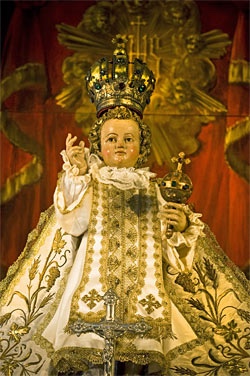
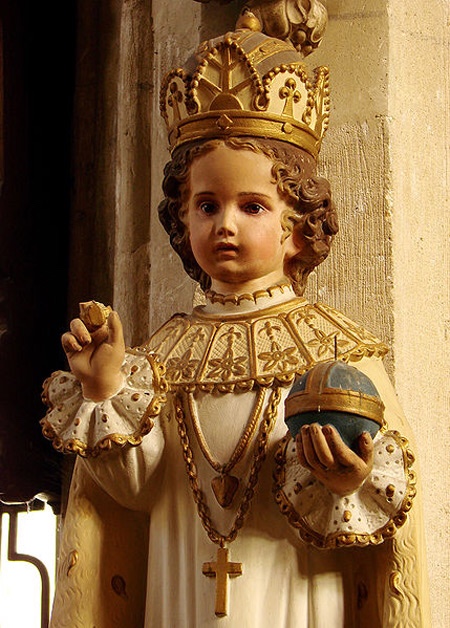
The Infant Jesus of Prague handles Ann’s financial stuff. Click image for details. [If you have a recurring donation set up and need to cancel for any reason – don’t hesitate to do so!]

img_0778.jpg

Pentecost Novena: Day Eight – The Gift of Wisdom

(The novena in honor of the Holy Spirit is the oldest of all novenas since it was first made at the direction of Our Lord Himself when He sent His apostles back to Jerusalem to await the coming of the Holy Spirit on the first Pentecost. It is still the only novena officially prescribed by the Church. Addressed to the Third Person of the Blessed Trinity, it is a powerful plea for the light and strength and love so sorely needed by every Christian.)

EIGHTH DAY (Friday Before Pentecost)

Bend the stubborn heart and will, melt the frozen warm the chill. Guide the steps that go astray!

The Gift of Wisdom

Embodying all the other gifts, as charity embraces all the other virtues, Wisdom is the most perfect of the gifts. Of wisdom it is written “all good things came to me with her, and innumerable riches through her hands.” It is the gift of Wisdom that strengthens our faith, fortifies hope, perfects charity, and promotes the practice of virtue in the highest degree. Wisdom enlightens the mind to discern and relish things divine, in the appreciation of which earthly joys lose their savor, whilst the Cross of Christ yields a divine sweetness according to the words of the Savior: “Take up thy cross and follow Me, for My yoke is sweet and My burden light.”

Prayer

Come, O Spirit of Wisdom, and reveal to my soul the mysteries of heavenly things, their exceeding greatness, power and beauty. Teach me to love them above and beyond all the passing joys and satisfactions of earth. Help me to attain them and possess them for ever. Amen.

Our Father ONCE.

Hail Mary ONCE.

Glory be to the Father SEVEN TIMES.

ACT OF CONSECRATION TO THE HOLY SPIRIT
To be recited daily during the Novena

On my knees before the great multitude of heavenly witnesses I offer myself, soul and body to You, Eternal Spirit of God. I adore the brightness of Your purity, the unerring keenness of Your justice, and the might of Your love. You are the Strength and Light of my soul. In You I live and move and am. I desire never to grieve You by unfaithfulness to grace and I pray with all my heart to be kept from the smallest sin against You. Mercifully guard my every thought and grant that I may always watch for Your light, and listen to Your voice, and follow Your gracious inspirations. I cling to You and give myself to You and ask You, by Your compassion to watch over me in my weakness. Holding the pierced Feet of Jesus and looking at His Five Wounds, and trusting in His Precious Blood and adoring His opened Side and stricken Heart, I implore You, Adorable Spirit, Helper of my infirmity, to keep me in Your grace that I may never sin against You. Give me grace O Holy Spirit, Spirit of the Father and the Son to say to You always and everywhere, “Speak Lord for Your servant heareth.” Amen.

PRAYER FOR THE SEVEN GIFTS OF THE HOLY SPIRIT
To be recited daily during the Novena

O Lord Jesus Christ Who, before ascending into heaven did promise to send the Holy Spirit to finish Your work in the souls of Your Apostles and Disciples, deign to grant the same Holy Spirit to me that He may perfect in my soul the work of Your grace and Your love. Grant me the Spirit of Wisdom that I may despise the perishable things of this world and aspire only after the things that are eternal, the Spirit of Understanding to enlighten my mind with the light of Your divine truth, the Spirit of Counsel that I may ever choose the surest way of pleasing God and gaining heaven, the Spirit of Fortitude that I may bear my cross with You and that I may overcome with courage all the obstacles that oppose my salvation, the Spirit of Knowledge that I may know God and know myself and grow perfect in the science of the Saints, the Spirit of Piety that I may find the service of God sweet and amiable, and the Spirit of Fear that I may be filled with a loving reverence towards God and may dread in any way to displease Him. Mark me, dear Lord with the sign of Your true disciples, and animate me in all things with Your Spirit. Amen.

Pentecost Novena: Day Seven – The Gift of Counsel

(The novena in honor of the Holy Spirit is the oldest of all novenas since it was first made at the direction of Our Lord Himself when He sent His apostles back to Jerusalem to await the coming of the Holy Spirit on the first Pentecost. It is still the only novena officially prescribed by the Church. Addressed to the Third Person of the Blessed Trinity, it is a powerful plea for the light and strength and love so sorely needed by every Christian.)

SEVENTH DAY (Thursday, Octave Day of the Ascension)

Heal our wounds–our strengths renew; On our dryness pour Thy dew, Wash the stains of guilt away.

The Gift of Counsel

The gift of Counsel endows the soul with supernatural prudence, enabling it to judge promptly and rightly what must be done, especially in difficult circumstances. Counsel applies the principles furnished by Knowledge and Understanding to the innumerable concrete cases that confront us in the course of our daily duty as parents, teachers, public servants, and Christian citizens. Counsel is supernatural common sense, a priceless treasure in the quest of salvation. “Above all these things, pray to the Most High, that He may direct thy way in truth.”

Prayer

Come, O Spirit of Counsel, help and guide me in all my ways, that I may always do Thy holy will. Incline my heart to that which is good; turn it away from all that is evil, and direct me by the straight path of Thy commandments to that goal of eternal life for which I long. Amen.

Our Father ONCE.

Hail Mary ONCE.

Glory be to the Father SEVEN TIMES.

ACT OF CONSECRATION TO THE HOLY SPIRIT
To be recited daily during the Novena

On my knees before the great multitude of heavenly witnesses I offer myself, soul and body to You, Eternal Spirit of God. I adore the brightness of Your purity, the unerring keenness of Your justice, and the might of Your love. You are the Strength and Light of my soul. In You I live and move and am. I desire never to grieve You by unfaithfulness to grace and I pray with all my heart to be kept from the smallest sin against You. Mercifully guard my every thought and grant that I may always watch for Your light, and listen to Your voice, and follow Your gracious inspirations. I cling to You and give myself to You and ask You, by Your compassion to watch over me in my weakness. Holding the pierced Feet of Jesus and looking at His Five Wounds, and trusting in His Precious Blood and adoring His opened Side and stricken Heart, I implore You, Adorable Spirit, Helper of my infirmity, to keep me in Your grace that I may never sin against You. Give me grace O Holy Spirit, Spirit of the Father and the Son to say to You always and everywhere, “Speak Lord for Your servant heareth.” Amen.

PRAYER FOR THE SEVEN GIFTS OF THE HOLY SPIRIT
To be recited daily during the Novena

O Lord Jesus Christ Who, before ascending into heaven did promise to send the Holy Spirit to finish Your work in the souls of Your Apostles and Disciples, deign to grant the same Holy Spirit to me that He may perfect in my soul the work of Your grace and Your love. Grant me the Spirit of Wisdom that I may despise the perishable things of this world and aspire only after the things that are eternal, the Spirit of Understanding to enlighten my mind with the light of Your divine truth, the Spirit of Counsel that I may ever choose the surest way of pleasing God and gaining heaven, the Spirit of Fortitude that I may bear my cross with You and that I may overcome with courage all the obstacles that oppose my salvation, the Spirit of Knowledge that I may know God and know myself and grow perfect in the science of the Saints, the Spirit of Piety that I may find the service of God sweet and amiable, and the Spirit of Fear that I may be filled with a loving reverence towards God and may dread in any way to displease Him. Mark me, dear Lord with the sign of Your true disciples, and animate me in all things with Your Spirit. Amen.

Noahide Law moving at… “Warp Speed”. Jared Kushner and Miriam Adelson will suffer NO CRITICISM from the goyim trash!

Statements of objective fact which are already broadly considered hate speech, but will be felonious within a decade:

-There is no salvation outside the Catholic Church.

-The Old Covenant is definitely null and void. Since the coming of Jesus Christ, the Messiah, the Old Covenant ceased and there are now only the Sacraments of the New Covenant.

-The Jews were the primary drivers of Christ’s Crucifixion, with Pontius Pilate and the Roman authority as secondary accomplices by cowardly succumbing to coercive death threats of denunciation of Pilate, his family and military staff to Tiberius Caesar as “traitors” by the Jews.

-The Holy Land is the territory of the Catholic Church by Divine Right (Jesus Christ is God), Hereditary Right (Jesus Christ is the hereditary heir to the Throne of David through his foster father St. Joseph, who was the hereditary king of the Jews in hiding until his death), and Right of Conquer (Jesus Christ raised Himself from the dead, thus conquering the Holy Land, the entire world, and the entire universe.)

-Some number fewer than six million Jews were killed in concentration camps during World War II.

-Jews are massively disproportionately represented in the power and control structures of the news media, the entertainment media, banking and finance, government, the production and distribution of adult and child pornography, the trafficking of adults and children for sex-sodomy, the LGBT+++ cult movement, academia, BigPharma and healthcare delivery.

-Washington DC is controlled through blackmail and bribery by Tel Aviv and the israeli intelligence, espionage and black-ops machine, frequently referred to as “Mossad”.

-Jeffrey Epstein and Ghislaine Maxwell were running a Mossad blackmail operation involving child rape, murder and cannibalism.

-“Donald Trump“ is controlled by the Jews.

-Jews believe themselves to be the master race and entitled to world domination.

-The vast majority of people claiming to be ethnically Jewish are staunch atheists.

Ten years ago today: The Speech edited and approved by Pope Benedict and delivered by his Personal Secretary Archbishop Georg Gänswein on May 20, ARSH 2016 – the full text. JUST READ IT.

(This is the jaw-dropping speech, personally edited by Pope Benedict before its delivery, in which +Gänswein lays out in no uncertain terms the Substantially Erroneous intention by Pope Benedict to fundamentally transform the Papacy into an expanded, collegial, synodal shared-ministry – to “demythologize” the Papacy. This speech, coupled with Canon 188, is what made me beyond morally certain that Pope Benedict never validly resigned, and therefore Bergoglio was an Antipope- which is obvious. I reprint the speech here in full. JUST READ IT. And remember, Pope Benedict edited and approved this speech before it was delivered by his Personal Secretary. This speech is entirely consistent with Pope Benedict’s words at his “final audience” on February 27, ARSH 2013, in which he made clear that he was “remaining in a new way… within the enclosure of St. Peter.” Emphases mine. -AB ’26)


Eminences, Excellencies, dear Brothers, Ladies and Gentlemen!

During one of the last conversations that the pope’s biographer, Peter Seewald of Munich, was able to have with Benedict XVI, as he was bidding him goodbye, he asked him: “Are you the end of the old or the beginning of the new?” The pope’s answer was brief and sure: “The one and the other,” he replied. The recorder was already turned off; that is why this final exchange is not found in any of the book-interviews with Peter Seewald, not even the famous Light of the World. It only appeared in an interview he granted to Corriere della Sera in the wake of Benedict XVI’s resignation, in which the biographer recalled those key words which are, in a certain way, a maxim of the book by Roberto Regoli, which we are presenting here today at the Gregorian.

Indeed, I must admit that perhaps it is impossible to sum up the pontificate of Benedict XVI in a more concise manner. And the one who says it, over the years, has had the privilege of experiencing this Pope up close as a “homo historicus,” the Western man par excellence who has embodied the wealth of Catholic tradition as no other; and — at the same time — has been daring enough to open the door to a new phase, to that historical turning point which no one five years ago could have ever imagined. Since then, we live in an historic era which in the 2,000-year history of the Church is without precedent.

As in the time of Peter, also today the one, holy, catholic and apostolic Church continues to have one legitimate Pope. But today we live with two living successors of Peter among us — who are not in a competitive relationship between themselves, and yet both have an extraordinary presence! We may add that the spirit of Joseph Ratzinger had already marked decisively the long pontificate of St. John Paul II, whom he faithfully served for almost a quarter of a century as Prefect of the Congregation for the Doctrine of the Faith. Many people even today continue to see this new situation as a kind of exceptional (not regular) state of the divinely instituted office of Peter (eine Art göttlichen Ausnahmezustandes).

But is it already time to assess the pontificate of Benedict XVI? Generally, in the history of the Church, popes can correctly be judged and classified only ex post. And as proof of this, Regoli himself mentions the case of Gregory VII, the great reforming pope of the Middle Ages, who at the end of his life died in exile in Salerno – a failure in the opinion of many of his contemporaries. And yet Gregory VII was the very one who, amid the controversies of his time, decisively shaped the face of the Church for the generations that followed. Much more daring, therefore, does Professor Regoli seem today in already attempting to take stock of the pontificate of Benedict XVI, while he is still alive.

The amount of critical material which he reviewed and analyzed to this end is massive and impressive. Indeed, Benedict XVI is and remains extraordinarily present also through his writings: both those produced as pope — the three volumes on Jesus of Nazareth and 16 (!) volumes of Teachings he gave us during his papacy — and as Professor Ratzinger or Cardinal Ratzinger, whose works could fill a small library.

And so, Regoli’s work is not lacking in footnotes, which are as numerous as the memories they awaken in me. For I was present when Benedict XVI, at the end of his mandate, removed the Fisherman’s ring, as is customary after the death of a pope, even though in this case he was still alive! I was present when, on the other hand, he decided not to give up the name he had chosen, as Pope Celestine V had done when, on December 13, 1294, a few months after the start of his ministry, be again became Pietro dal Morrone.

Since February 2013 the papal ministry is therefore no longer what it was before. It is and remains the foundation of the Catholic Church; and yet it is a foundation which Benedict XVI has profoundly and permanently transformed during his exceptional pontificate (Ausnahmepontifikat), regarding which the sober Cardinal Sodano, reacting simply and directly immediately after the surprising resignation, deeply moved and almost stunned, exclaimed that the news hit the cardinals who were gathered “like a bolt from out of the blue.”

It was the morning of that very day when, in the evening, a bolt of lightning with an incredible roar struck the tip of St. Peter’s dome positioned just over the tomb of the Prince of the Apostles. Rarely has the cosmos more dramatically accompanied a historic turning point. But on the morning of that February 11, the dean of the College of Cardinals, Angelo Sodano, concluded his reply to Benedict XVI’s statement with an initial and similarly cosmic assessment of the pontificate, when he concluded, saying: “Certainly, the stars in the sky will always continue to shine, and so too will the star of his pontificate always shine in our midst.”

Equally brilliant and illuminating is the thorough and well documented exposition by Don Regoli of the different phases of the pontificate. Especially its beginning in the April 2005 conclave, from which Joseph Ratzinger, after one of the shortest elections in the history of the Church, emerged elected after only four ballots following a dramatic struggle between the so-called “Salt of the Earth Party,” around Cardinals López Trujíllo, Ruini, Herranz, Rouco Varela or Medina and the so-called “St. Gallen Group” around Cardinals Danneels, Martini, Silvestrini or Murphy-O’Connor; a group that recently the same Cardinal Danneels of Brussels so amusedly called “a kind of Mafia-Club.” The election was certainly also the result of a clash, whose key Ratzinger himself, as dean of the College of Cardinals, had furnished in the historic homily of April 18, 2005 in St. Peter’s; precisely, where to a “dictatorship of relativism that does not recognize anything as definitive and whose ultimate goal consists solely of one’s own ego and desires” he contrasted another measure: “the Son of God, the true man” as “the measure of true humanism.” Today we read this part of Regoli’s intelligent analysis almost like a breathtaking detective novel of not so long ago; whereas the “dictatorship of relativism” has for a long time sweepingly expressed itself through the many channels of the new means of communication which, in 2005, barely could be imagined.

The name that the new pope took immediately after his election therefore already represented a plan. Joseph Ratzinger did not become Pope John Paul III, as perhaps many would have wished. Instead, he went back to Benedict XV — the unheeded and unlucky great pope of peace of the terrible years of the First World War — and to St. Benedict of Norcia, patriarch of monasticism and patron of Europe. I could appear as a star witness to testify that, over the previous years, Cardinal Ratzinger never pushed to rise to the highest office of the Catholic Church.

Instead, he was already dreaming of a condition that would have allowed him to write several last books in peace and tranquility. Everyone knows that things went differently. During the election, then, in the Sistine Chapel, I was a witness that he saw the election as a “true shock” and was “upset,” and that he felt “dizzy” as soon as he realized that “the axe” of the election would fall on him. I am not revealing any secrets here, because it was Benedict XVI himself who confessed all of this publicly on the occasion of the first audience granted to pilgrims who had come from Germany. And so it isn’t surprising that it was Benedict XVI who immediately after his election invited the faithful to pray for him, as this book again reminds us.

Regoli maps out the various years of ministry in a fascinating and moving way, recalling the skill and confidence with which Benedict XVI exercised his mandate. And what emerged from the time when, just a few months after his election, he invited for a private conversation both his old, fierce antagonist Hans Küng as well as Oriana Fallaci, the agnostic and combative grande dame of Jewish origin, from the Italian secular mass media; or when he appointed Werner Arber, the Swiss Evangelical and Nobel Prize winner, as the first non-Catholic President of the Pontifical Academy of Social Sciences. Regoli does not cover up the accusation of an insufficient knowledge of men that was often leveled against the brilliant theologian in the shoes of the Fisherman; a man capable of truly brilliantly evaluating texts and difficult books, and who nevertheless, in 2010, frankly confided to Peter Seewald how difficult he found decisions about people because “no one can read another man’s heart.” How true it is!

Regoli rightly calls 2010 a “black year” for the pope, precisely in relation to the tragic and fatal accident that befell Manuela Camagni, one of the four Memores Domini belonging to the small “papal family.” I can certainly confirm it. In comparison with this misfortune the media sensationalism of those years — from the case of traditionalist bishop, Williamson, to a series of increasingly malicious attacks against the pope — while having a certain effect, did not strike the pope’s heart as much as the death of Manuela, who was torn so suddenly from our midst. Benedict was not an “actor pope,” and even less an insensitive “automaton pope”; even on the throne of Peter he was and he remained a man; or, as Conrad Ferdinand Meyer would say, he was not a “clever book,” he was “a man with his contradictions.” That is how I myself have daily been able to come to know and appreciate him. And so he has remained until today.

Regoli observes, however, that after the last encyclical, Caritas in veritate of December 4, 2009, a dynamic, innovative papacy with a strong drive from a liturgical, ecumenical and canonical perspective, suddenly appeared to have “slowed down,” been blocked, and bogged down. Although it is true that the headwinds increased in the years that followed, I cannot confirm this judgment. Benedict’s travels to the UK (2010), to Germany and to Erfurt, the city of Luther (2011), or to the heated Middle East — to concerned Christians in Lebanon (2012) — have all been ecumenical milestones in recent years. His decisive handling to solve the issue of abuse was and remains a decisive indication on how to proceed. And when, before him, has there ever been a pope who — along with his onerous task — has also written books on Jesus of Nazareth, which perhaps will also be regarded as his most important legacy?

It isn’t necessary here that I dwell on how he, who was so struck by the sudden death of Manuela Camagni, later also suffered the betrayal of Paolo Gabriele, who was also a member of the same “papal family.” And yet it is good for me to say at long last, with all clarity, that Benedict, in the end, did not step down because of a poor and misguided chamber assistant, or because of the “tidbits” coming from his apartment which, in the so-called “Vatileaks affair,” circulated like fool’s gold in Rome but were traded in the rest of the world like authentic gold bullion. No traitor or “raven” [the Italian press’s nickname for the Vatileaks source] or any journalist would have been able to push him to that decision. That scandal was too small for such a thing, and so much greater was the well-considered step of millennial historical significance that Benedict XVI made.

The exposition of these events by Regoli also merits consideration because he does not advance the claim that he sounds and fully explains this last, mysterious step; not further enriching the swarm of legends with more assumptions that have little or nothing to do with reality. And I, too, a firsthand witness of the spectacular and unexpected step of Benedict XVI, I must admit that what always comes to mind is the well-known and brilliant axiom with which, in the Middle Ages, John Duns Scotus justified the divine decree for the Immaculate Conception of the Mother of God:

Decuit, potuit, fecit.”

That is to say: it was fitting, because it was reasonable. God could do it, therefore he did it. I apply the axiom to the decision to resign in the following way: it was fitting, because Benedict XVI was aware that he lacked the necessary strength for the extremely onerous office. He could do it, because he had already thoroughly thought through, from a theological point of view, the possibility of popes emeritus for the future. So he did it.

The momentous resignation of the theologian pope represented a step forward primarily by the fact that, on February 11, 2013, speaking in Latin in front of the surprised cardinals, he introduced into the Catholic Church the new institution of “pope emeritus,” stating that his strength was no longer sufficient “to properly exercise the Petrine ministry.” The key word in that statement is munus petrinum, translated — as happens most of the time — with “Petrine ministry.” And yet, munus, in Latin, has a multiplicity of meanings: it can mean service, duty, guide or gift, even prodigy. Before and after his resignation, Benedict understood and understands his task as participation in such a “Petrine ministry.” He has left the papal throne and yet, with the step made on February 11, 2013, he has not at all abandoned this ministry. Instead, he has complemented the personal office with a collegial and synodal dimension, as a quasi shared ministry (als einen quasi gemeinsamen Dienst); as though, by this, he wanted to reiterate once again the invitation contained in the motto that the then Joseph Ratzinger took as archbishop of Munich and Freising and which he then naturally maintained as bishop of Rome: “cooperatores veritatis,” which means “fellow workers in the truth.” In fact, it is not in the singular but the plural; it is taken from the Third Letter of John, in which in verse 8 it is written: “We ought to support such men, that we may be fellow workers in the truth.”

Since the election of his successor Francis, on March 13, 2013, there are not therefore two popes, but de facto an expanded ministry — with an active member and a contemplative member. This is why Benedict XVI has not given up either his name, or the white cassock. This is why the correct name by which to address him even today is “Your Holiness”; and this is also why he has not retired to a secluded monastery, but within the Vatican — as if he had only taken a step to the side to make room for his successor and a new stage in the history of the papacy which he, by that step, enriched with the “power station” of his prayer and his compassion located in the Vatican Gardens.

It was “the least expected step in contemporary Catholicism,” Regoli writes, and yet a possibility which Cardinal Ratzinger had already pondered publicly on August 10, 1978 in Munich, in a homily on the occasion of the death of Paul VI. Thirty-five years later, he has not abandoned the Office of Peter — something which would have been entirely impossible for him after his irrevocable acceptance of the office in April 2005. By an act of extraordinary courage, he has instead renewed this office (even against the opinion of well-meaning and undoubtedly competent advisers), and with a final effort he has strengthened it (as I hope). Of course only history will prove this. But in the history of the Church it shall remain true that, in the year 2013, the famous theologian on the throne of Peter became history’s first “pope emeritus.” Since then, his role — allow me to repeat it once again — is entirely different from that, for example, of the holy Pope Celestine V, who after his resignation in 1294 would have liked to return to being a hermit, becoming instead a prisoner of his successor, Boniface VIII (to whom today in the Church we owe the establishment of jubilee years). To date, in fact, there has never been a step like that taken by Benedict XVI. So it is not surprising that it has been seen by some as revolutionary, or to the contrary as entirely consistent with the Gospel; while still others see the papacy in this way secularized as never before, and thus more collegial and functional or even simply more human and less sacred. And still others are of the opinion that Benedict XVI, with this step, has almost — speaking in theological and historical-critical terms — demythologized the papacy.

In his overview of the pontificate, Regoli clearly lays this all out as never before. Perhaps the most moving part of the reading for me was the place where, in a long quote, he recalls the last general audience of Pope Benedict XVI on February 27, 2013 when, under an unforgettable clear and brisk sky, the pope, who shortly thereafter would resign, summarized his pontificate as follows:

“It has been a portion of the Church’s journey which has had its moments of joy and light, but also moments which were not easy; I have felt like Saint Peter with the Apostles in the boat on the Sea of Galilee: The Lord has given us so many days of sun and of light winds, days when the catch was abundant; there were also moments when the waters were rough and the winds against us, as throughout the Church’s history, and the Lord seemed to be sleeping. But I have always known that the Lord is in that boat, and I have always known that the barque of the Church is not mine, it is not ours, but His. Nor does the Lord let it sink; it is He who guides it, surely also through the men whom He has chosen, because He so wished. This has been, and is, a certainty which nothing can obscure.”

I must admit that, rereading these words can still bring tears to my eyes, all the more so because I saw in person and up close how unconditional, for himself and for his ministry, was Pope Benedict’s adherence to St Benedict’s words, for whom “nothing is to be placed before the love of Christ,” nihil amori Christi praeponere, as stated in rule handed down to us by Pope Gregory the Great. I was a witness to this, but I still remain fascinated by the accuracy of that final analysis in St. Peter’s Square which sounded so poetic but was nothing less than prophetic. In fact, they are words to which today, too, Pope Francis would immediately and certainly subscribe. Not to the popes but to Christ, to the Lord Himself and to no one else belongs the barque of Peter, whipped by the waves of the stormy sea, when time and again we fear that the Lord is asleep and that our needs are not important to Him, while just one word is enough for him to stop every storm; when instead, more than the high waves and the howling wind, it is our disbelief, our little faith and our impatience that make us continually fall into panic.

Thus, this book once again throws a consoling gaze on the peaceful imperturbability and serenity of Benedict XVI, at the helm of the barque of Peter in the dramatic years 2005-2013. At the same time, however, through this illuminating account, Regoli himself now also takes part in the munus Petri of which I spoke. Like Peter Seewald and others before him, Roberto Regoli — as a priest, professor and scholar — also thus enters into that enlarged Petrine ministry around the successors of the Apostle Peter; and for this today we offer him heartfelt thanks.

Archbishop Georg Gänswein, Prefect of the Papal Household

20 May 2016

Pentecost Novena: Day Six – The Gift of Understanding

(The novena in honor of the Holy Spirit is the oldest of all novenas since it was first made at the direction of Our Lord Himself when He sent His apostles back to Jerusalem to await the coming of the Holy Spirit on the first Pentecost. It is still the only novena officially prescribed by the Church. Addressed to the Third Person of the Blessed Trinity, it is a powerful plea for the light and strength and love so sorely needed by every Christian.)

SIXTH DAY (Wednesday after Ascension)

If Thou take Thy grace away, nothing pure in man will stay, All his good is turn’d to ill.

The Gift of Understanding

Understanding, as a gift of the Holy Spirit, helps us to grasp the meaning of the truths of our holy religion. By faith we know them, but by Understanding we learn to appreciate and relish them. It enables us to penetrate the inner meaning of revealed truths and through them to be quickened to newness of life. Our faith ceases to be sterile and inactive, but inspires a mode of life that bears eloquent testimony to the faith that is in us; we begin to “walk worthy of God in all things pleasing, and increasing in the knowledge of God.”

Prayer

Come, O Spirit of Understanding, and enlighten our minds, that we may know and believe all the mysteries of salvation; and may we merit at last to see the eternal light in Thy Light; and in the light of glory to have a clear vision of Thee and the Father and the Son. Amen.

Our Father ONCE.

Hail Mary ONCE.

Glory be to the Father SEVEN TIMES.

ACT OF CONSECRATION TO THE HOLY SPIRIT
To be recited daily during the Novena

On my knees before the great multitude of heavenly witnesses I offer myself, soul and body to You, Eternal Spirit of God. I adore the brightness of Your purity, the unerring keenness of Your justice, and the might of Your love. You are the Strength and Light of my soul. In You I live and move and am. I desire never to grieve You by unfaithfulness to grace and I pray with all my heart to be kept from the smallest sin against You. Mercifully guard my every thought and grant that I may always watch for Your light, and listen to Your voice, and follow Your gracious inspirations. I cling to You and give myself to You and ask You, by Your compassion to watch over me in my weakness. Holding the pierced Feet of Jesus and looking at His Five Wounds, and trusting in His Precious Blood and adoring His opened Side and stricken Heart, I implore You, Adorable Spirit, Helper of my infirmity, to keep me in Your grace that I may never sin against You. Give me grace O Holy Spirit, Spirit of the Father and the Son to say to You always and everywhere, “Speak Lord for Your servant heareth.” Amen.

PRAYER FOR THE SEVEN GIFTS OF THE HOLY SPIRIT
To be recited daily during the Novena

O Lord Jesus Christ Who, before ascending into heaven did promise to send the Holy Spirit to finish Your work in the souls of Your Apostles and Disciples, deign to grant the same Holy Spirit to me that He may perfect in my soul the work of Your grace and Your love. Grant me the Spirit of Wisdom that I may despise the perishable things of this world and aspire only after the things that are eternal, the Spirit of Understanding to enlighten my mind with the light of Your divine truth, the Spirit of Counsel that I may ever choose the surest way of pleasing God and gaining heaven, the Spirit of Fortitude that I may bear my cross with You and that I may overcome with courage all the obstacles that oppose my salvation, the Spirit of Knowledge that I may know God and know myself and grow perfect in the science of the Saints, the Spirit of Piety that I may find the service of God sweet and amiable, and the Spirit of Fear that I may be filled with a loving reverence towards God and may dread in any way to displease Him. Mark me, dear Lord with the sign of Your true disciples, and animate me in all things with Your Spirit. Amen.

Descent of the Holy Ghost, Charles Lebrun, ARSH 1657

Mailbag: These Ancient Ways

Hello Ann and the Tombstone 4-

Thank you for your encouraging work and words in these crazy daze. I look forward to each podcast – and thank you for sharing about Nurse Claire – and through her I found Dr. Haugan – such important voices in our world today.

Anyway, this beautiful Pentecost Novena you have been posting is just another example of the richness and beauty of the Church that Jesus started – THE One, Holy, Catholic and Apostolic Church.


As a former protestant I had no idea or access to such deep and ancient devotions (novena, prayers, octaves, Ember Days, Marian antiphons, Gregorian chant, the Divine Office, The Catechism of the Council of Trent, writings of the Church Fathers and Doctors – the list is endless) – nor had I any clue as to how powerful Our Blessed Mother’s prayers were/are – and I had no concept of the Communion of Saints – and now as a traditional Catholic I am asking for their intercession daily.

As I read and pray in these ancient ways, I feel connected to my ancestors who were all Catholic (at least before Luther) and am so thankful to have found my feet on solid rock, while all around us is shifting sand.

Mont-Saint-Michel, Normandy, France.

Thank you again for sharing this original Novena – and keep up the good fight – there are many of us waking up and praying up .

Stay near His feet,

G

Pentecost Novena: Day Five – The Gift of Knowledge

(The novena in honor of the Holy Spirit is the oldest of all novenas since it was first made at the direction of Our Lord Himself when He sent His apostles back to Jerusalem to await the coming of the Holy Spirit on the first Pentecost. It is still the only novena officially prescribed by the Church. Addressed to the Third Person of the Blessed Trinity, it is a powerful plea for the light and strength and love so sorely needed by every Christian.)

FIFTH DAY (Tuesday after Ascension)

Light immortal! Light Divine! Visit Thou these hearts of Thine, And our inmost being fill!

The Gift of Knowledge

The gift of Knowledge enables the soul to evaluate created things at their true worth–in their relation to God. Knowledge unmasks the pretense of creatures, reveals their emptiness, and points out their only true purpose as instruments in the service of God. It shows us the loving care of God even in adversity, and directs us to glorify Him in every circumstance of life. Guided by its light, we put first things first, and prize the friendship of God beyond all else. “Knowledge is a fountain of life to him that possesseth it.”

Prayer

Come, O Blessed Spirit of Knowledge, and grant that I may perceive the will of the Father; show me the nothingness of earthly things, that I may realize their vanity and use them only for Thy glory and my own salvation, looking ever beyond them to Thee, and Thy eternal rewards. Amen.

Our Father ONCE.

Hail Mary ONCE.

Glory be to the Father SEVEN TIMES.

ACT OF CONSECRATION TO THE HOLY SPIRIT
To be recited daily during the Novena

On my knees before the great multitude of heavenly witnesses I offer myself, soul and body to You, Eternal Spirit of God. I adore the brightness of Your purity, the unerring keenness of Your justice, and the might of Your love. You are the Strength and Light of my soul. In You I live and move and am. I desire never to grieve You by unfaithfulness to grace and I pray with all my heart to be kept from the smallest sin against You. Mercifully guard my every thought and grant that I may always watch for Your light, and listen to Your voice, and follow Your gracious inspirations. I cling to You and give myself to You and ask You, by Your compassion to watch over me in my weakness. Holding the pierced Feet of Jesus and looking at His Five Wounds, and trusting in His Precious Blood and adoring His opened Side and stricken Heart, I implore You, Adorable Spirit, Helper of my infirmity, to keep me in Your grace that I may never sin against You. Give me grace O Holy Spirit, Spirit of the Father and the Son to say to You always and everywhere, “Speak Lord for Your servant heareth.” Amen.

PRAYER FOR THE SEVEN GIFTS OF THE HOLY SPIRIT
To be recited daily during the Novena

O Lord Jesus Christ Who, before ascending into heaven did promise to send the Holy Spirit to finish Your work in the souls of Your Apostles and Disciples, deign to grant the same Holy Spirit to me that He may perfect in my soul the work of Your grace and Your love. Grant me the Spirit of Wisdom that I may despise the perishable things of this world and aspire only after the things that are eternal, the Spirit of Understanding to enlighten my mind with the light of Your divine truth, the Spirit of Counsel that I may ever choose the surest way of pleasing God and gaining heaven, the Spirit of Fortitude that I may bear my cross with You and that I may overcome with courage all the obstacles that oppose my salvation, the Spirit of Knowledge that I may know God and know myself and grow perfect in the science of the Saints, the Spirit of Piety that I may find the service of God sweet and amiable, and the Spirit of Fear that I may be filled with a loving reverence towards God and may dread in any way to displease Him. Mark me, dear Lord with the sign of Your true disciples, and animate me in all things with Your Spirit. Amen.

Pentecost, Fra Angelico

Either of these two men would probably make better bishops than almost any today.

Two peasant men, probably illiterate, kneeling in the wet, muddy road as a priest passes carrying the Eucharist, likely as Viaticum to a dying person.

These men observably have a far greater belief and understanding of the Catholic faith and love for God than less than a handful of bishops today. Literally, less than five. In the entire world. Of which the SSPX currently have two.

This is why the SSPX is consecrating bishops. It’s a state of emergency. Dire, dire emergency.